Mechanisms of Reward Distribution Across Ethereum Slot Networks
Écrit par Jonas Roth · 7/9/2026
Mechanisms of Reward Distribution Across Ethereum Slot Networks
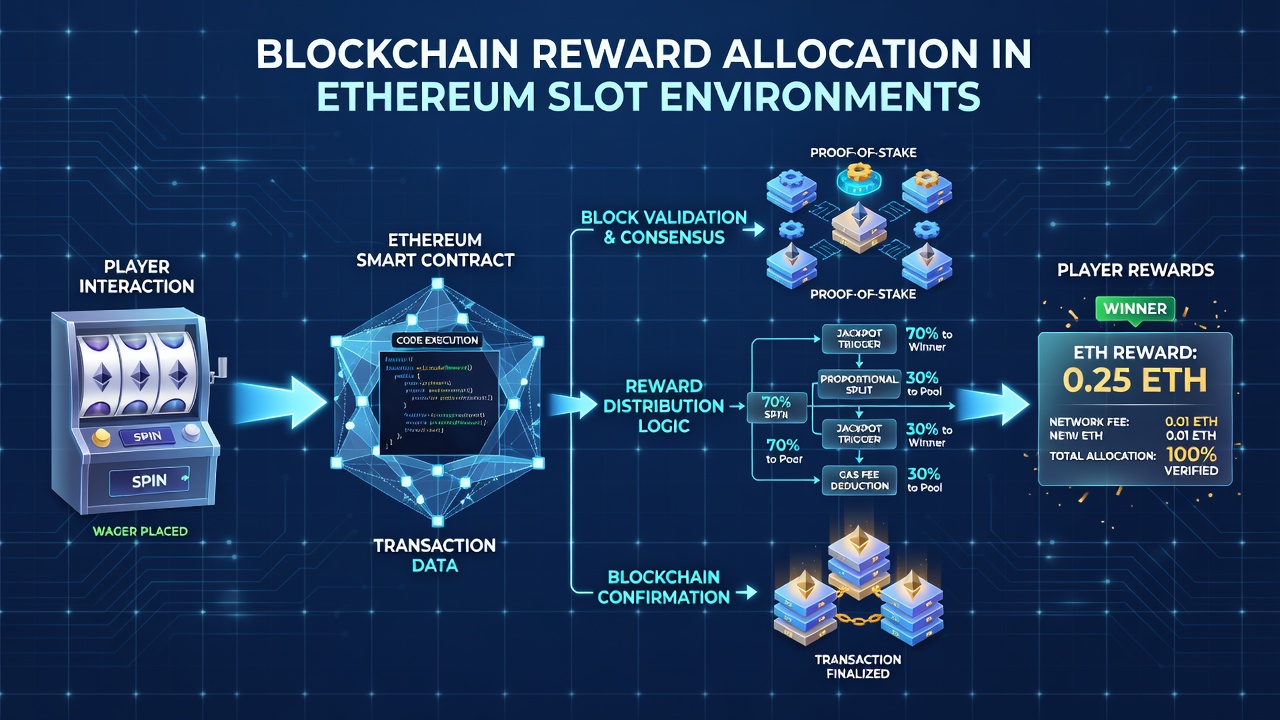
Blockchain networks that power slot environments on Ethereum rely on proof-of-stake consensus to manage block production and validator incentives, while smart contracts handle the distribution of player rewards from game pools. Slots in this context refer to both the 12-second time intervals in Ethereum's beacon chain and the digital slot machine games built on top of the network, creating a layered system where network-level rewards and application-level payouts operate through separate but interconnected protocols.
Ethereum Proof-of-Stake Framework
Ethereum transitioned to proof-of-stake in 2022, replacing energy-intensive mining with validator staking that secures the chain and determines who proposes blocks in each slot. Validators stake 32 ETH to participate, and the protocol selects proposers through a randomized process weighted by stake size, with rewards accruing from transaction fees, priority tips, and newly issued ETH. Data from the Ethereum Foundation shows that effective validator rewards averaged between 3 and 5 percent annually in recent periods, depending on network participation rates and total staked ETH.
Slot environments in gaming applications tap into this infrastructure by deploying smart contracts that lock player wagers and release payouts according to predefined rules encoded on-chain. These contracts often integrate with verifiable random number generators or oracle services to determine outcomes, then trigger transfers from prize pools to winning addresses without requiring centralized custodians.
Smart Contract Mechanics for Payouts
Developers structure reward allocation in Ethereum slot games through multi-signature wallets and automated escrow mechanisms that release funds only when conditions encoded in the contract are met. When a player initiates a spin, the contract records the bet on-chain, queries randomness, calculates any win multiplier, and executes a transfer if the result qualifies. Observers note that this process typically completes in under 15 seconds because Ethereum's slot timing aligns closely with transaction finality on layer-2 rollups frequently used for gaming applications.
Researchers at institutions such as the University of Nicosia have documented how gas optimization techniques reduce costs for frequent micro-transactions common in slot environments, allowing networks to handle thousands of reward distributions per hour during peak periods. The contracts maintain transparency because every allocation appears in public transaction logs, enabling third-party verification of fairness claims.
Validator and Network-Level Incentives
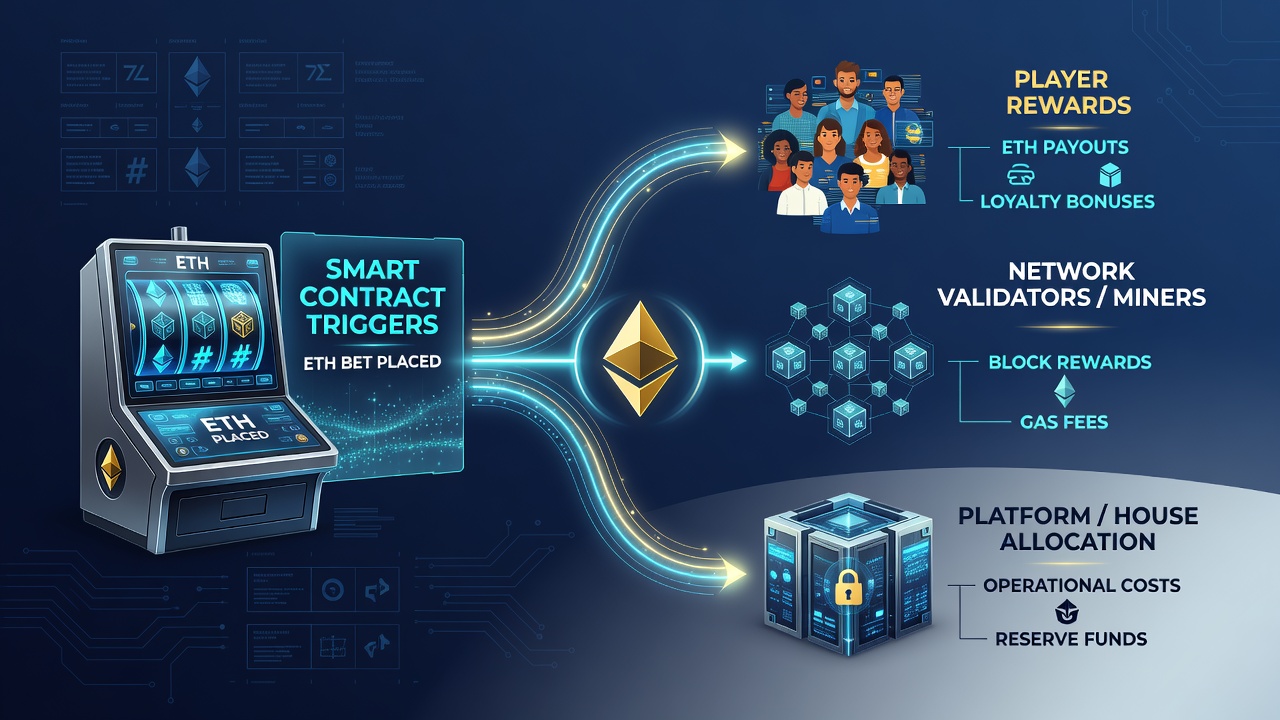
While gaming contracts manage player rewards, Ethereum validators continue to receive protocol-level compensation for including those contract transactions in blocks. Proposers earn priority fees from high-volume gaming activity, which can supplement base staking returns during periods of elevated slot machine usage. Studies from the Ethereum ecosystem indicate that decentralized applications, including gaming platforms, accounted for a measurable share of total transaction fees processed in 2025, illustrating the interdependence between application usage and validator economics.
Penalties for validator misbehavior, such as missing attestations or proposing invalid blocks, deduct small portions of staked ETH through the protocol's slashing mechanism. This design maintains network integrity while ensuring that reward allocation remains predictable and automated, independent of any single operator.
Integration with Layer-2 Scaling Solutions
Many Ethereum-powered slot environments operate on layer-2 networks such as Arbitrum or Optimism to achieve lower fees and higher throughput. These solutions batch transactions and settle final states on the Ethereum mainnet at regular intervals, preserving security guarantees while enabling reward distributions that cost fractions of a cent. Figures released by layer-2 analytics platforms reveal that gaming-related activity on these networks grew steadily through 2025, with reward claim transactions forming a consistent portion of daily volume.
Cross-chain bridges and wrapped asset standards further extend reward allocation beyond native ETH, allowing slot environments to distribute stablecoins or other tokens based on the same smart contract logic. The process remains anchored to Ethereum's slot schedule because final settlement occurs through mainnet validators.
Developments Expected by September 2026
Protocol upgrades scheduled for implementation around September 2026 aim to refine reward curves and reduce issuance rates as total staked ETH continues to rise. These changes would adjust how validators share in network fees while maintaining incentives for securing the chain that underpins slot environment contracts. Industry reports from organizations including the Blockchain Association in the United States and research groups in Australia project that such adjustments could influence transaction fee markets and, by extension, the cost structure of on-chain reward distributions in gaming applications.
Conclusion
Ethereum's dual structure of slot-based consensus and programmable smart contracts creates a framework where network validators and gaming applications allocate rewards through automated, transparent mechanisms. Player payouts flow from contract-defined pools while validators earn from transaction inclusion and staking, with layer-2 solutions extending capacity and reducing costs. As protocol parameters evolve, the allocation logic adapts through on-chain governance and code updates, preserving the deterministic nature of both network security rewards and application-level distributions.